
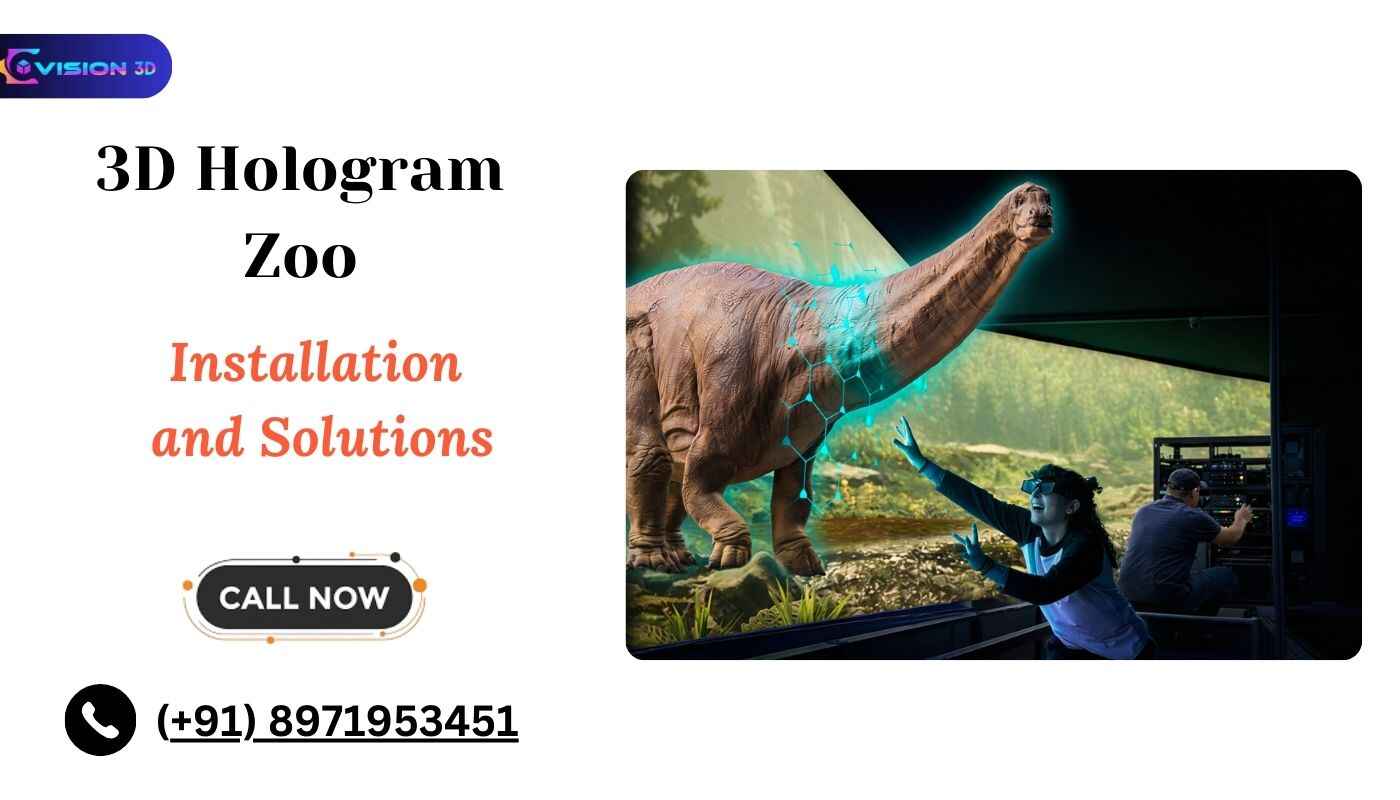
The 3D Hologram Zoo is a 3D hologram projection and LED fan-based technology. It enables the interpretation of wildlife in an immersive style. This includes holographic animals and hologram aquariums. In most instances, installations cause technical challenges. These challenges can derail the experience. The guide includes the most important questions and problem solutions. It is based on official configurations. It also uses the experience of the manufacturer. This helps deploy the system correctly.
What is a 3D Hologram Zoo?
Animals in a real way. They later realize the animals are not real. We use laser lights, projectors, and 3D glasses to create this effect. You can cite projects like Hologram Zoo Gold Coast as examples. Holographic Zoo by Axiom Holographics is another example. In these projects, tunnels allow multiple projectors to be shared. Such arrangements include hologram information screens. They also include hologram animation of wildlife in 3D hologram form. Hologram fish tanks recreate a simulated environment. This environment is eco-friendly.
Core Components
The major aspects are high-lumen projectors such as BenQ LU960UST to display edge-blended images. We include 3D-type hologram makers. These include spinning LED fans. Hologram aquariums have transparent screens. They perform fish animation with LED projections. 3D hologram animation software converts content for playback. Formal installations need fixed mounts. They need power supplies. They require multi-angle view content libraries.
Frequent Installation Problems: What Challenges Do 3D Hologram Zoos Face?
- Poor Image Quality and Visibility
Fuzzy or dim holograms are mostly due to the incompatibility of the brightness of the projector. Bad-quality content also causes them. Interference of ambient lights creates visibility issues. Seams appear in the 3D Hologram Zoo tunnel due to improper edge-blending. Hologram aquariums fail in bright rooms. Seeing distance and angles makes this worse. Design limits immersion.
- Limited Viewing Angles and Synchronization
Single projectors limit the angles, and multi-fan systems do not work because the rotation speed or frame rate of the other fan and its projectors do not match properly, leading to jittering 3D hologram images. Inthe Hologram Zoo group experience, shared views are distorted by unsynchronized units.
- Environmental and Hardware Interference
Large installations suffer from display distortion due to humidity, temperature changes, or vibrations; loose connections, and power losses. In hologram aquariums, fans powered by LED turn opaque, and the mounts move.
- Technical Glitches and Content Issues
Freezes are a result of old software or bad wiring, converting videos to 3D hologram makers requires certain formats, or it plays poorly. The hologram 3D has multi-device synchronization in zoos, which makes it complex.
Proven Solutions: What Are the Best Fixes for Installation Problems?
- Optimizing Image Quality
Adjust the projector settings by changing its brightness and resolution according to the existing light conditions. The project uses high-resolution 3D hologram animation files as its main visual component. The research investigates ideal viewing distances in both dark and light conditions of hologram aquariums. The test employs official programs from 3D hologram manufacturers, which include user manuals as testing material.
- Enhancing Angles and Sync
Install several projectors or fans that have mirrors; align settings through control software to have uniform speeds—axiom setups. In Axiom setups, holograms are automatically adjusted to the position of the viewer by infrared tracking.
- Mitigating Environmental Factors
HVAC-controlled control room conditions: stabilizers, power, big 3D Hologram Zoo arrays. Fix safely and check blades/LEDs periodically.
- Resolving Glitches
Install updates, test connections, and check the accuracy of TF card conversion. In case of spliced fans, assign power lines. Look at the manuals of websites such as Vision3D to calibrate the hologram aquarium hardware.
Final Thoughts
A 3D Hologram Zoo is not just an online exhibition. It is the transition point between technology, education, and entertainment. Installation has its difficulties. These are both technical to calibrate it correctly. They are also content-wise maintenance challenges. The result is increased visitor interaction. It also offers more environmentally friendly displays. This makes it worth consideration for progressive museums and attractions. To know more about the 3D Hologram Zoo, connect with the Vision3D customer care number.
FAQs
A 3D Hologram Zoo is an innovative technology-based exhibit that involves running a holographic projection to recreate realistic animals as well as realistic settings where visitors can explore the wildlife without having to touch the animals.
No, modern hologram installations are based on display technologies that create the 3D effect without glasses and are, therefore, available to every visitor.
They are both immersive displays, but a hologram aquarium is specifically about aquatic life and environments, whereas a 3D Hologram Zoo is all about a wide variety of terrestrial and airborne species, which may need different underlying technology installation.