
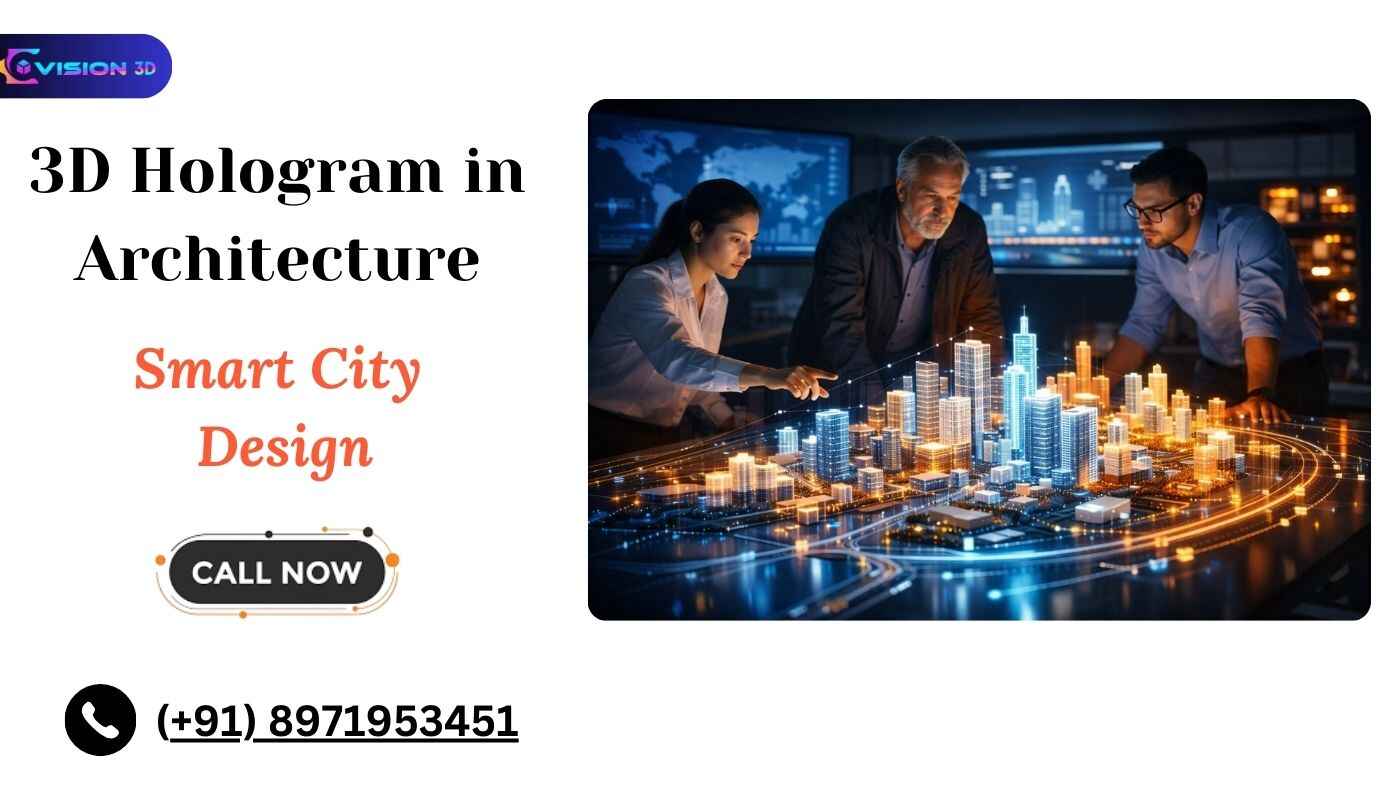
In 2026, the applications of the smart city will include 3D hologram architecture. This immersive digital project is interactive in nature. It allows real-time collaboration among architects, engineers, and citizens. These new findings including 40% greater speed in securing approvals for projects through AI simulations.
Enhanced Visualization and Stakeholder Buy-In
As part of the holographic/experiential presentation, 3D hologram architecture breathes life into abstract architectural plans and is a good tool for visualization for stakeholders.
- On an interactive display, urban planners can rotate entire neighborhoods and immediately grasp the scale, density, and spatial relationships. It reduces 50% of 2D blueprint misinterpretations.
- Table projector for real estate presentations enables developers to showcase high-rise buildings, parks, or transit points. It gives confidence to investors by giving them a taste of reality.
Such an approach shortens approval times and escorts projects along the community’s giant support.
Real-Time Data Integration and Scenario Testing
This real-time information feeds static model scenarios into highly dynamic visualization tools in their 3D Hologram architecture.
- Projected stats on, e.g., population growth, traffic flows, or flood risks are overlaid onto holographic images, giving a neat scenario for last-minute adjustments, right in meeting time.
- This mode virtually projects the actual carbon footprint and spills shadow effects created by a proposed high-rise, enabling teams to test sustainability while excellent ideas are still underway, saving millions in reconstruction.
Governments report an average 35% increase in public approval ratings due to these ahead-of-time predictive visualizations.
Multi-User Collaboration and Remote Participation
With the appearance of multi-user interaction, the extended team is led to the holographic displays.
- In real-time, six planners will control the gestural movement of a model of the transit hub and maintain eye contact whilst communicating.
- In other cases, remote specialists appear as holographic avatars and actively collaborate with teams worldwide, eliminating the need for travel while supporting smart city projects on a global scale.
Inclusivity is promoted for decision-making levels from the engineers down to the residents.
Public Engagement and Experience Centers
Popping holograms that interact with citizens in public settings became possible with the 3D Hologram explanation.
- For real estate previews, tables will project families through proposed green spaces or high-speed rail routes in city halls.
- A vote cast through gestures into zoning changes contributes to building a relationship of trust and gauges heatmaps around community priorities directly from the interactions for cities that use these platforms.
Cities utilizing these centers certainly may see increased engagement and accelerated consensus.
Infrastructure Planning and Hazard Mitigation
Through 3D holographic architecture, engineers would scrutinize complex systems accurately.
- However, holographic imaging helps to simulate intense load effects on bridges, subway burrows, and flood defenses in order to reveal defects through virtual prototyping.
- On the other hand, rules can be redrawn to place traffic data beside zoning maps so that bike lanes or electric vehicle charging spots are outlined in line with smart city policies.
Examples from Dubai to the US illustrate the direction of this council approval race.
Cost and Vision
The long-term reduction in costs is one of the biggest advantages of going for 3D holographic architecture.
- Tons of finance saved by avoiding expensive late-stage changes through early virtual testing. A real estimate of returns counts up to fivefold in 18 months.
- To be set to happen in 2026, AR color sensors will scan real locations for auto-generated virtual constructs, have auto-graded audio inputs, and grid GIS satellite-mapping integration.
Little training of under 1 hour and flash-free LED will make installation effective even in bright rooms.
Challenges and Solution
While the initial costs in setting up the table projector for real estate and hologram hardware see an 18% reduction as compared to those in 2025, a new entry would describe these plus points: easily understood gestures of the user interface with limited technical know-how, and all this in any place, miniaturized into stretch-and-go portable units. The first to pioneer dimensional holography in the settlement over other high-magnitude institutional footprints in competitors in the global market. Talent promotion shall demonstrate nothing but the efficient sponsorship of talents. Meanwhile, having happier residents counts as a free bonus.
FAQs
3D hologram architecture is a modern concept that can project a lifelike building model in mid-air, so teams can rotate various designs back and forth, detect flaws quickly, and finally get faster approval.
Ready-to-use 3D holograms showcase various buildings and models on screen, and remote teams get a chance to work together on live interaction. For faster decision-making, they can negotiate amendments in certain areas and aspects.
Holograms replace physical models, and fewer corrections are necessary, thereby saving time and material. It ensures projects are delivered under budget with less waste.